

Quick Summary: Timothée Chalamet Street Style
- Timothée Chalamet street style is one of the most studied aesthetic systems in men’s fashion right now, built on slim-fit tailoring, tonal complexity, and a single statement piece per look — principles that hold consistently across red carpets, press appearances, and off-duty moments since at least 2022.
- He wasn’t at Cannes 2026. Chalamet didn’t walk the Croisette, attend screenings, or appear at any festival events this year. This piece is a breakdown of his documented aesthetic, not a report on a current appearance.
- The Timothee Chalamet fashion style guide comes down to four mechanics: fit first, tonal layering, one-wildcard restraint, and a heritage foundation with one unexpected item. Those principles are learnable and transferable at any budget.
- Men’s festival street style 2026 on the Croisette ran toward quiet European luxury — linen, silk, unstructured-but-precise tailoring — and his visual grammar maps onto that register so naturally that his name keeps appearing in the conversation even though he wasn’t there.
- Knowing how to dress like Timothee Chalamet doesn’t require access to Haider Ackermann or Saint Laurent. It requires understanding what’s actually driving each choice, starting with fit, which is the one element that makes everything else work or fall apart.
- Common mistakes when trying to copy Timothée Chalamet street style are covered in full, along with accessible dupes, a price architecture at three tiers, and a seven-question FAQ on the style mechanics that readers keep searching.
- The debate poll at the end asks the question that splits the style community every time: when you adopt a celebrity’s aesthetic, what actually transfers?

Timothée Chalamet street style has a grammar to it. You can identify a look before you see his face in the photo. That’s not instinct or luck — it’s the product of a consistent aesthetic position that’s held across press circuits, red carpets, and off-duty appearances for the better part of four years. During Cannes season, his name shows up in every festival dressing conversation. The reason for that is worth understanding.
First, though: he wasn’t at Cannes 2026. Chalamet didn’t attend screenings, didn’t appear on the Croisette, wasn’t spotted at any festival events. If you’ve seen his name in Cannes-adjacent style coverage this week, it’s because his visual grammar keeps getting referenced by people who are actually there — not because he was present. The influence is real. The attendance is not.
With that settled: here’s what Timothée Chalamet street style actually is, how it works, and how to apply the same logic to your own wardrobe.
What Makes Timothée Chalamet Street Style Different
Timothée Chalamet street style gets called “effortless” constantly. That word usually means the mechanics aren’t visible, which isn’t the same as there being no mechanics. There are specific rules operating across every look, and they’re consistent enough to qualify as an actual system.
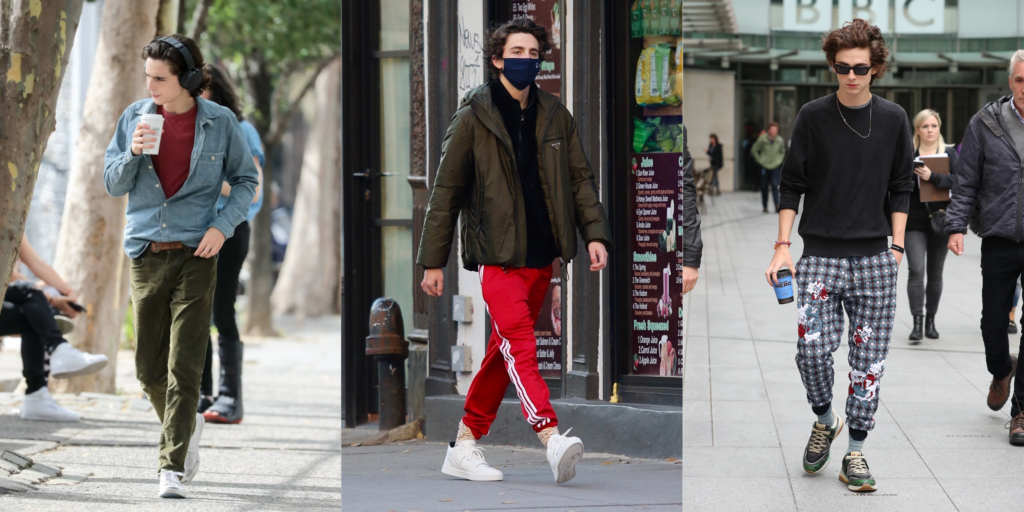
Fit before everything else. Every piece in Timothée Chalamet street style fits precisely. The tailoring sits slim and close — not tight, but small. Proportions read deliberately retro without tipping into costume. His approach has held this line for years while the broader menswear conversation swung hard toward oversized. He ignored that trend entirely, and the contrast is part of why his looks stand out in street style photography.
Tonal complexity, not pattern mixing. He doesn’t build visual interest through pattern. He builds it through texture within a single color family. Black on black in two different materials. Deep brown with a caramel finish. Ivory on white. The palette stays narrow. The textural variation does all the work. This is a key part of how to dress like Timothee Chalamet — the color restraint reads as sophisticated precisely because the texture underneath it is doing something.
One statement object, surrounded by restraint. Every look in the Timothée Chalamet street style archive has one piece that gets the visual budget. A shoe with unusual construction, a bag with specific provenance, a piece of jewelry that isn’t generic. Everything else is quiet. That’s the discipline that makes the statement piece land — it’s readable because it’s not competing with anything else.
Heritage foundation, one wildcard. He anchors his looks in established French houses — Haider Ackermann, Rick Owens, Saint Laurent — and introduces one piece that’s unexpected. Usually archival, vintage, or at minimum something with a story. This is also the part of Timothée Chalamet street style that’s hardest to directly replicate. The wildcard works because of what surrounds it. The principle transfers; the specific item rarely does.
Why Timothée Chalamet Street Style Has This Much Pull
The community conversation around Timothee Chalamet fashion style has been active and specific for a while now. Style subreddits, menswear TikTok accounts, and r/malefashionadvice threads have spent real time dissecting how it works — not just admiring it.
Part of what drives that engagement is that his aesthetic offers something to argue about. People who find his looks interesting can reverse-engineer them. People who find them precious or try-hard can make that case specifically too. Both conversations require understanding the underlying logic, which is why a Timothee Chalamet fashion style guide actually has utility — it gives people a shared reference point for a debate that’s already happening.
The other part is timing. He developed his aesthetic during a period when men’s fashion had gotten genuinely boring. The options were expensive logomania or athleisure oversized. Timothée Chalamet street style was doing something structurally different from both, and he had enough platform visibility to make it stick.
Men’s Festival Street Style 2026: Where His Aesthetic Fits
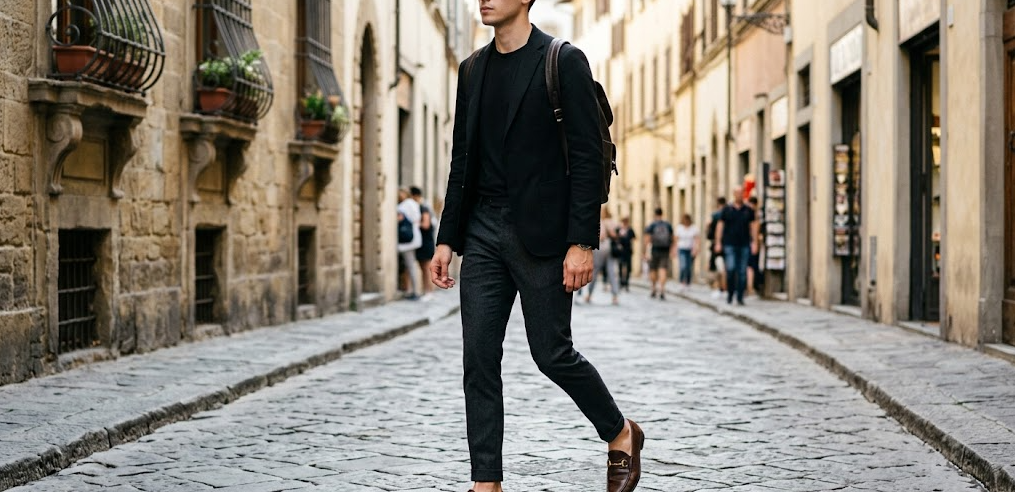
Men’s festival street style 2026 at Cannes ran in a specific direction. The looks that got photographed on the Croisette leaned warm, European, and quiet — linen jackets, silk trousers, unstructured pieces cut with precision. Not resort-wear loose. Not streetwear-inflected. The register was “European city in June.”
Timothée Chalamet street style maps onto that context almost exactly. His slim-fit tailoring, tonal palette work, and single-statement structure are calibrated for the kind of outdoor warmth and natural light that festival photography produces. His aesthetic travels well across contexts, which is why it keeps appearing in men’s festival street style 2026 coverage even without an actual appearance.
For anyone building a look around the Cannes-adjacent summer aesthetic right now: the framework is slim structured pieces in neutral tonal palettes, one interesting item, fit that’s been attended to. That’s the core of Timothée Chalamet street style, and it holds from the Croisette to any warm-weather event through October.
How to Dress Like Timothee Chalamet: The Transferable Principles
Knowing how to dress like Timothee Chalamet gets reduced to product recommendations constantly. That’s the wrong approach. The products change. The principles are what’s actually transferable.
- Get the fit right first. You can’t replicate Timothée Chalamet street style by buying the right label in the wrong size. His pieces are tailored. Off-the-rack fits at any price point don’t replicate a tailored silhouette. A cheap blazer that’s been altered to fit correctly reads better than an expensive one worn straight off the rack in a size too large. If you’re going to invest in one thing on the path to how to dress like Timothee Chalamet, it’s alterations — not the labels.
- Build a tonal base before adding anything else. Pick a single color family and stay in it. All black, all navy, all warm tan. Layer textures within that family — matte with subtle sheen, woven with smooth. Once that base works, it’ll carry almost anything you add. If the base doesn’t work, the statement piece won’t save it.
- Add one thing, not several. The wildcard principle is how to dress like Timothee Chalamet at the most practical level. One item gets to be interesting. A distinctive shoe, a specific bag, a piece of jewelry with actual character. Everything else stays quiet. Most people invert this, adding multiple interesting pieces and wondering why the look doesn’t read as intentional. The restraint is the technique.
Affiliate disclosure: some links below may earn a small commission. All products selected independently.
Price architecture: Hero pieces from the houses he actually wears (Haider Ackermann, Saint Laurent, Rick Owens) run $800 and up. For accessible Timothée Chalamet street style dupes: slim-fit tailoring from ASOS or COS hits the silhouette at $80–$150. H&M slim blazers work well as a base layer at under $60. For the wildcard piece, vintage and secondhand sourcing at Depop or ThredUp often outperforms anything new at the same price point — the provenance is what makes the wildcard read, and secondhand delivers that when new pieces don’t.
Common Mistakes When Copying Timothée Chalamet Street Style
Starting with the statement piece. If you buy the “Chalamet shoe” first and try to build a look around it, you’ll end up with an outfit built to display a shoe rather than a coherent look that includes one. The base comes first. The wildcard comes last.
Assuming tonal means flat. All-black or all-navy looks visually complex when the fabrics are different. A matte wool blazer over a silk-finish tee in the same black reads completely differently than two identical fabrics. The texture is where the work is in Timothée Chalamet street style, and skipping that step is why copycat attempts often land as boring rather than restrained.
Blending trends. His approach to men’s festival street style works because it commits to a position. Mixing his slim-fit logic with a current oversized piece produces something that looks like it’s from two separate looks that got combined. Pick one direction and stay in it.
Skipping the tailor. This comes up again because it’s where most attempts at Timothée Chalamet street style break down. The fit is the foundation. Everything else follows from it.
Overdressing for outdoor context. Men’s festival street style 2026 on the Croisette worked because people dressed for actual outdoor heat in May. A heavy wool blazer doesn’t work in 28-degree weather, regardless of how well it photographs. The lightweight structured pieces that appear consistently in Timothée Chalamet street style work precisely because they’re calibrated to context.
The Bottom Line on Timothée Chalamet Street Style
The Timothée Chalamet street style system is learnable. Slim fit over oversized, tonal texture work over pattern mixing, one statement in an otherwise restrained look, a heritage foundation with one unexpected item. These aren’t mystery principles — they’re specific choices that can be applied at any budget once you understand what they’re doing.
The thing that can’t be shortcut is fit. Everything else in how to dress like Timothee Chalamet is accessible. The tailoring is the one investment that actually changes how the rest of it reads.
And one last time for clarity: Chalamet wasn’t at Cannes 2026. The looks being referenced in this year’s men’s festival street style conversation are from his documented archive — and they’re worth studying regardless of which festival he’s attending or skipping this season.
Explore more: full Cannes 2026 style coverage | celebrity street style breakdowns
Get the next major style moment before the group chat does: subscribe to CelebrityGossiper
FAQ: Timothée Chalamet Street Style
1. Was Timothée Chalamet at Cannes 2026?
No. Chalamet didn’t attend Cannes 2026. He wasn’t at any festival screenings or events on the Croisette this year. The Timothée Chalamet street style references appearing in Cannes coverage are about his documented aesthetic, not a current appearance.
2. What’s the core of Timothée Chalamet street style?
Four repeatable principles: fit that’s precisely tailored rather than oversized, tonal complexity through texture rather than pattern, one statement piece per look with everything else staying quiet, and a heritage-house foundation with one unexpected wildcard item.
3. Can you replicate Timothée Chalamet street style on a budget?
Yes, with the right priorities. Fit alterations matter more than labels — a cheap blazer that’s been tailored reads better than an expensive one in the wrong size. Slim-fit pieces from ASOS, COS, or H&M cover the silhouette at $60–$150. For the wildcard element, secondhand sourcing at Depop or ThredUp often delivers more character than anything new at the same price.
4. Why does Timothée Chalamet street style get referenced in men’s festival style conversations so often?
Because his aesthetic maps naturally onto the men’s festival street style 2026 register — quiet European luxury, slim structure, precise tailoring — without being event-specific. His visual grammar travels across contexts, which is why it shows up in festival discussions even without an appearance.
5. What’s a Timothee Chalamet fashion style guide in practical terms?
Lead with slim-fit tailoring in a tonal palette. Layer textures within a single color family. Add one item with genuine interest or provenance. Keep everything else simple. That’s the framework — and it’s functional before you add any specific pieces.
6. What does “tonal dressing” mean in the context of Timothée Chalamet street style?
It means staying within one color family and varying the materials rather than the colors. All black in a matte blazer and a silk-finish tee reads more visually complex than two different colors in the same fabric. The complexity in his looks comes from texture, not palette width.
7. What’s the biggest mistake people make when trying to copy Timothée Chalamet street style?
Starting with the statement piece and building backwards. The wildcard only works if it’s surrounded by restraint. When everything in a look is competing for attention, nothing reads as intentional. Build the quiet base first. Let the interesting piece land last.
Debate Poll
When you adopt a celebrity’s aesthetic, what actually transfers to your wardrobe?
- The specific pieces — finding the exact items or close dupes
- The underlying principles — understanding the rules behind the look
Why did you vote that way? Drop your take in the comments.