
Quick Summary: Met Gala 2026
- The 2026 Met Gala took place on May 4 at the Metropolitan Museum of Art in New York City, with the theme “Costume Art” and the dress code “Fashion Is Art.”
- Beyoncé co-chaired the event for the first time in a decade, making her red carpet return one of the most closely watched moments of the year.
- Nicole Kidman and Venus Williams joined Beyoncé as co-chairs alongside Anna Wintour, who continues to organize the gala annually.
- The host committee included Sabrina Carpenter, Doja Cat, Teyana Taylor, LISA, Sam Smith, and Zoë Kravitz, all confirmed to walk the carpet.
- The “Fashion Is Art” dress code was deliberately open-ended, inviting guests to treat their own bodies as an artistic canvas and setting the stage for the year’s most polarizing and praised looks.
- Jeff Bezos and Lauren Sánchez served as honorary co-chairs and lead sponsors, a choice that sparked street protests and a public boycott from New York City Mayor Zohran Mamdani.
- The new Condé M. Nast Galleries, a 12,000-square-foot permanent fashion space at the Met, officially opened to gala guests for the first time this year.
- The “Costume Art” exhibition, organized by curator Andrew Bolton, pairs 400 garments and accessories with artworks spanning 5,000 years of history.

There is exactly one night a year when your group chat, your For You page, and your morning coffee scroll are all pointing at the same thing. Monday night was that night.
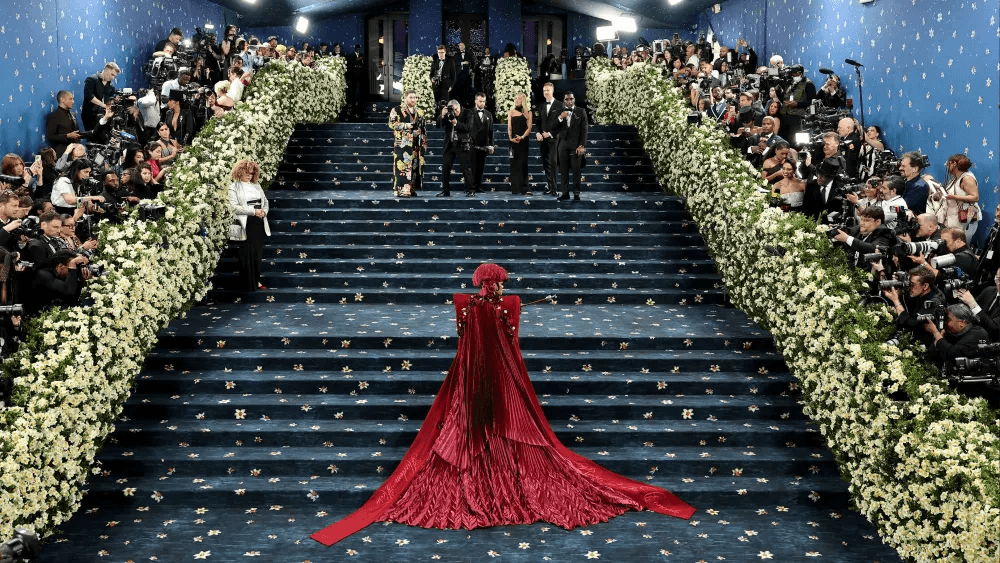
The 2026 Met Gala arrived with Beyoncé’s first red carpet appearance in ten years, a dress code so open it functioned more like a challenge than a guideline, and a sponsorship controversy loud enough to produce street protests in Manhattan before the first limousine pulled up. None of that was background noise. All of it shaped what walked those steps.
What “Fashion Is Art” Actually Demanded
Every year, the dress code functions as a Rorschach test. The guests who understand it are the ones who treat the instructions as an invitation to make an argument, rather than simply wear an outfit.
This year’s code, “Fashion Is Art,” was built around the Costume Institute’s new exhibition, which places garments in conversation with paintings, sculptures, and objects spanning five thousand years of history. The Met’s invitation asked guests to “express their own relationship to fashion as an embodied art form and celebrate the countless depictions of the dressed body throughout art history.”
That is a remarkably wide lane, wider than most recent editions. In past years, guests had clearer reference points: tailoring, garden imagery, the camp aesthetic. This year, the door was left fully open. A look could reference a specific painting, use the body as raw sculptural material, reject traditional silhouette entirely, or simply be so extraordinary in its beauty that the argument made itself.
Curator Andrew Bolton framed the central idea this way: the dressed body is the common thread connecting all the arts, and even the nude is never truly naked because it is always inscribed with cultural values and ideas.
That framing has real consequences for how to read what arrived on the red carpet. The body itself was the medium on Monday night, not only the gown or the jewels, but the entire composed statement. The guests who understood that distinction are generating the conversations still going this morning.
Beyoncé’s Return and Why It Mattered
Beyoncé’s last Met Gala appearance came in 2016, when she wore a nude latex Givenchy gown that delivered a futuristic fashion moment before she took a decade-long break from the event. In those ten years, the Met Gala continued without her, producing its annual cycle of iconic looks and internet arguments. Her absence was a consistent presence in any honest best-dressed conversation.
As co-chair, she was front and center for the first time in about a decade, making her one of the most anticipated arrivals of the night. There were also rumors that she planned to use the event to debut Act III, which raised the possibility that her appearance would function simultaneously as a fashion statement and a promotional opening move. Whether or not that materialized, the effect on the red carpet was real. Every other arrival was being processed in relation to what she might do, which is its own kind of influence.
Her previous Met appearances consistently pushed toward the body as spectacle, using Givenchy’s vocabulary of latex, embellishment, and controlled transparency to make arguments about beauty and power. Given that the “Fashion Is Art” dress code explicitly positions the dressed body as an artistic medium, her aesthetic history lined up with the assignment in a way that few other guests could claim.
Sabrina Carpenter, Doja Cat, and the Host Committee
The host committee this year rewarded close attention. Confirmed members included Sabrina Carpenter, Doja Cat, Gwendoline Christie, Misty Copeland, Alex Consani, Elizabeth Debicki, Lena Dunham, Paloma Elsesser, LISA, Sam Smith, Teyana Taylor, and Zoë Kravitz.
Sabrina Carpenter has been building one of the more considered red carpet records of anyone her age. She wore custom Louis Vuitton at last year’s gala and arrived at Coachella 2026 in a fully custom Dior wardrobe. Given her strong ties with the house of Dior, a Met look with genuine fashion-world weight was the reasonable expectation, rather than something assembled purely for the camera.
Doja Cat is at this point a category unto herself on this carpet. Her 2023 Karl Lagerfeld tribute, where she committed fully to becoming the cat Choupette in full Oscar de la Renta with prosthetic makeup and a decision to speak only in meows through every interview, set a benchmark for total artistic commitment. A dress code asking guests to treat fashion as art gave her more permission than any previous edition.
Teyana Taylor, fresh off a Best Picture win at the 2026 Oscars for her directorial work, arrived as one of the most culturally credentialed people on the carpet. Her 2025 Met look was already a reference point. The expectation for 2026 was proportional to the year she had.
The Bezos Controversy Running Underneath It All
In the days leading up to Monday, anti-Bezos posters appeared across New York City streets, targeting Jeff Bezos and Lauren Sánchez in their capacities as lead sponsors and honorary co-chairs. Some carried the slogan “Boycott the Bezos Met Gala” and deployed imagery designed to jar against the glamour of the occasion. Activists called for a boycott to protest Amazon’s labor practices and its alleged association with U.S. immigration enforcement agencies.
New York City Mayor Zohran Mamdani confirmed that he and his wife would not be attending, breaking with what has been a traditional mayoral presence at the event. The gala proceeded regardless.
What the controversy did was add a layer of meaning to every look that climbed those steps. Fashion has always carried political weight even when it presents itself as purely aesthetic, and this year that was harder to ignore than usual. The “Costume Art” exhibition itself includes 25 new mannequins created to represent a diversity of body types, a direct departure from the standard size 36 mannequin long imposed by institutions. That curatorial choice signals something about what the Met is trying to do with this new gallery space. Whether the guests at the fundraiser that opened it reflected the same priorities was, for one evening, observable in real time.
Getting the Look: What the “Fashion Is Art” Dress Code Means for Your Cart
The Met Gala reliably produces a week of visual references that translate into shoppable territory, and this year’s open-ended dress code is particularly useful for that purpose.
When guests are invited to reference art history through their clothing, the resulting looks tend to favor heavily embellished and sculptural silhouettes, the kind of elevated statement pieces that are currently available at accessible price points through ASOS, Revolve, and Nordstrom. Looks that commit to a single powerful element, whether an exaggerated collar, a dramatic sleeve, or a deconstructed bodice, translate directly into the kind of elevated basics that photograph well and signal fashion awareness without requiring a couture budget. If any look from Monday night referenced a specific painting or art movement directly, expect the high-street dupe market to respond within 48 hours.
Amazon Fashion, ASOS, and Revolve all push commission windows specifically around the gala because the traffic data tells them where the audience goes. The looks are already making their way into search. The affiliate window for Met Gala-adjacent fashion is open now and historically closes faster than most people expect.
What This Edition Will Be Remembered For
Every Met Gala produces a hierarchy in retrospect. A dress code as open as “Fashion Is Art” makes that hierarchy sharper than usual, because it separates guests who arrived with a genuine point of view from the ones who simply wore something beautiful and called it done.
The exhibition pairs garments with objects organized around categories of body type across 5,000 years of art history. That is not a neutral editorial choice. It asks whether the body has been represented consistently and fairly across art and fashion over time. Guests who dressed in response to that question, even without naming it explicitly, made the most interesting choices of the night.
The 2026 Met Gala will be remembered for Beyoncé’s return, because that question will come first in any recap. It will also be remembered for what the dress code asked of everyone present, and for the visible gap between the guests who answered it and the ones who walked past it in couture.

Conclusion
The 2026 Met Gala pushed the fashion conversation, the cultural argument, and the political context into the same room and asked everyone inside to dress for it. A dress code this open rewards genuine engagement and has little patience for beautiful safe choices. Beyoncé’s decade-long absence ending at co-chair level made her arrival the organizing event of the night, and the Bezos controversy gave every look on those steps an unwanted but unavoidable context.
What happened Monday night is still being processed across every platform, and the conversation will keep moving for the rest of the week. The looks are the starting point. What they say about the people who made them is the longer story.
FAQ
1. What is the theme of the 2026 Met Gala? The 2026 Met Gala theme is “Costume Art,” which is the title of the Costume Institute’s spring exhibition at the Metropolitan Museum of Art. The dress code issued to guests is “Fashion Is Art,” inviting attendees to express their relationship to fashion as an embodied art form.
2. When and where did the 2026 Met Gala take place? The 2026 Met Gala took place on Monday, May 4, at the Metropolitan Museum of Art on Fifth Avenue in Manhattan, New York City. The red carpet officially opened at 6 p.m. EST.
3. Who are the co-chairs of the 2026 Met Gala? The 2026 Met Gala co-chairs are Beyoncé, Nicole Kidman, Venus Williams, and Anna Wintour. Jeff Bezos and Lauren Sánchez served as honorary chairs and lead sponsors alongside Saint Laurent and Condé Nast.
4. Why is Beyoncé’s attendance at the 2026 Met Gala significant? Beyoncé had not attended the Met Gala since 2016, making her 2026 return her first appearance in a decade. As co-chair, she was one of the most anticipated arrivals of the night, with widespread speculation that she might use the occasion to debut a new music era.
5. Who was on the 2026 Met Gala host committee? Confirmed host committee members included Sabrina Carpenter, Doja Cat, Gwendoline Christie, Elizabeth Debicki, Lena Dunham, Alex Consani, LISA, Sam Smith, Teyana Taylor, Paloma Elsesser, and Zoë Kravitz, among others.
6. What is the “Costume Art” exhibition about? The “Costume Art” exhibition pairs approximately 400 garments and accessories with artworks spanning 5,000 years of art history, organized around categories of body type. It also inaugurates the Condé M. Nast Galleries, a new permanent 12,000-square-foot fashion space at the Met.
7. Why was the 2026 Met Gala controversial before it began? Jeff Bezos and Lauren Sánchez’s roles as honorary chairs and lead sponsors prompted protests across New York City, with activists citing Amazon’s labor practices and alleged associations with U.S. immigration enforcement. NYC Mayor Zohran Mamdani publicly confirmed he would not attend in protest.
DEBATE POLL
Beyoncé, Sabrina Carpenter, and dozens of A-listers walked a red carpet knowing Jeff Bezos was the lead sponsor. The mayor of New York refused to show up. Your favorite celebrity did not.
Does that change how you see their look?
- The look is the look. Fashion and politics are not the same conversation.
- The second you walk those steps, you’ve made a political statement whether you meant to or not.
Why did you vote that way? Drop your take in the comments.